
A radiator does not have to be an eyesore. The trick is to disguise it in a way that still lets warm air circulate freely, so your room stays comfortable and efficient.
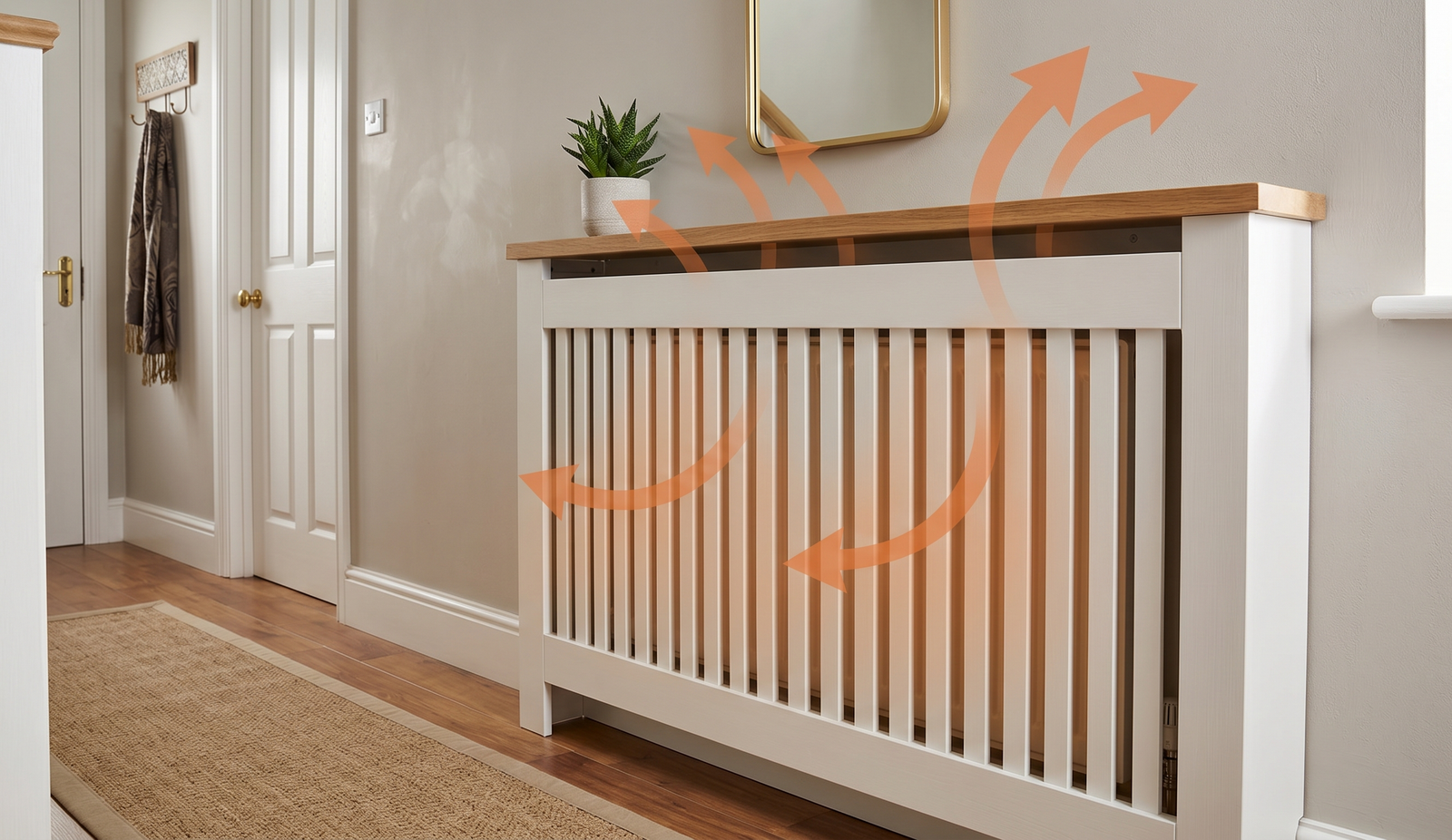
Why radiator hiding can go wrong
The main mistake people make is boxing a radiator in too tightly. If you use a solid front, block the top, or crowd the space around it, heat gets trapped instead of spreading into the room. That can make the radiator work harder and the room feel cooler than it should.
The good news is that you can soften the look of a radiator without sacrificing warmth. It just means choosing the right method for the space.
Best ways to hide a radiator
1. Use a ventilated radiator cover
A well-designed vertical slat radiator cover is one of the neatest solutions. Look for one with slats, perforations or a grille front, plus enough space around the radiator for air to move properly. This keeps the radiator visually tucked away while still allowing heat to rise and circulate.
A cover can also give you a handy shelf for light decorative items, but avoid loading it with books, baskets or heavy objects. Anything sitting on top can interfere with airflow.
2. Paint it to blend in
If you do not want to cover the radiator at all, painting it the same colour as the wall can make a big difference. It helps the radiator fade into the background rather than stand out as a separate feature.
This is often the simplest option and works especially well in smaller rooms where bulky covers would feel too dominant. Use a paint that is suitable for metal and designed for high temperatures.
3. Add a shelf above it
A slim shelf above a radiator can help disguise it without enclosing it. This works well in hallways, kitchens and living rooms, especially when the shelf is kept simple and mounted high enough to allow warm air to rise. A useful option here is a bookshelf radiator cover with solid oak shelves or a radiator cover with side shelves.
You can style the shelf lightly with framed prints or a small plant, but keep the area around the radiator itself open. The idea is to draw the eye away, not block the heat.
4. Build it into joinery
If you are renovating or fitting bespoke furniture, you can integrate the radiator into shelving, cabinetry or a window seat. This gives a very polished finish and can make the radiator almost disappear into the design. A strong example is a bespoke radiator cover with drawers and solid oak top.
The key is ventilation. Any built-in solution should include grilles, gaps or open sections so air can still move through the space properly.
5. Use a removable wrap
For rented homes or temporary fixes, a magnetic radiator wrap can be a smart choice. It lets you disguise the radiator with a printed or colour-matched panel, and it can usually be removed without leaving any damage behind.
Before buying, measure your radiator carefully — wraps are best suited to flat-fronted panel radiators rather than column-style ones. Check that the wrap you choose is rated for the surface temperatures your radiator reaches, as cheaper options can discolour or warp over time. This option works well as a stopgap while you decide on a more permanent solution.
How to keep the heat
If you want to hide a radiator and keep performance strong, ventilation matters most. Leave enough clearance at the sides, top and front so the warm air can circulate naturally. Avoid solid fronts, thick curtains hanging over the radiator, and furniture pushed too close in front of it.
You can also improve efficiency by placing reflective foil behind the radiator, especially on external walls. This helps send more heat back into the room instead of letting it disappear into the wall. It is a small change, but it can make the whole setup work better.
What works best in each room
In a hallway, a ventilated cover or narrow shelf usually works well because it can double as a useful surface. In a living room, painted radiators or fitted joinery often look the most seamless. In a child’s bedroom, a cover can add safety by reducing direct contact with the hot surface. If you are fitting out a professional space such as a beauty room or nail studio, take a look at our bespoke salon furniture collection — designed specifically for professional salon environments across the UK.
For bathrooms, choose any cover or solution that is moisture-resistant, and ensure there is plenty of ventilation to prevent damp building up around the unit. In a conservatory or porch, a slim ventilated cover is usually the best fit, as space tends to be limited and airflow is especially important.
For rented homes, removable wraps and simple visual camouflage tend to be the most practical. They are easy to change later and do not need major work.
A simple rule to follow
If you remember one thing, make it this: hide the radiator, not the airflow. Anything that keeps the space open and lets warm air move freely is a good choice, while anything sealed up or packed in too tightly is likely to reduce heat output.
A radiator can be discreet, stylish and still effective. You do not need to choose between appearance and comfort — just design the solution around both.
Frequently asked questions
Does a radiator cover reduce heat output?
A poorly designed cover can trap heat and reduce efficiency, but a well-ventilated cover with a slat or grille front will have little to no impact on heat output. The key is ensuring there is enough clearance around the radiator for air to circulate freely.
How much clearance does a radiator cover need?
As a general guide, leave at least 10cm above the radiator and a few centimetres at the sides and front. This allows warm air to rise naturally and spread into the room. Always check the manufacturer’s guidance for the specific cover you choose.
Can I paint a radiator to hide it?
Yes — painting a radiator the same colour as the wall is one of the simplest ways to make it less noticeable. Use a specialist radiator paint that is designed for metal surfaces and can withstand high temperatures without cracking, peeling or releasing fumes.
Are radiator covers safe around children?
A radiator cover can actually improve safety in a child’s bedroom or playroom, as it reduces direct contact with the hot surface. Make sure the cover is sturdy, properly fixed in place, and has no sharp edges or small parts.
Can I fit a radiator cover myself?
Most freestanding radiator covers simply slot into place and require no fixings at all, making them straightforward to install yourself. Built-in or bespoke joinery solutions will typically need professional fitting to ensure a secure and well-ventilated finish.
Find the right radiator cover for your home
Whether you are after a simple ventilated cover, a mirrored design, or a bespoke built-in solution, we hand-craft every piece to order. Browse our full range of radiator covers to find the perfect fit for your space — or get in touch if you would like something made to measure.